
The mudroom is the only room in a house designed to get dirty on purpose, and in these mountains it collects on a schedule. Gravel drives, red clay that stains, a pollen season that turns everything yellow in April, and wet boots from October through March. Whatever is outside arrives in the first six feet of the house and stops there, which is the entire point of the room.
Most North Georgia homes and cabins already have something in that spot. A bench, a run of lockers, hooks and cubbies built in by whoever finished the house. The storage is rarely the problem. What dates the room, and what makes it look grimy long before it is, is the finish on all that millwork.
The built-ins usually outlast their paint
Casework in an entry takes more physical contact than anything else in the house. Boots go into the cubbies wet, and the door casing beside the bench gets a hand on it every single time somebody comes in. Years of that wear through a finish in the exact places people touch, and the wear reads as age even when the carpentry is dead solid.
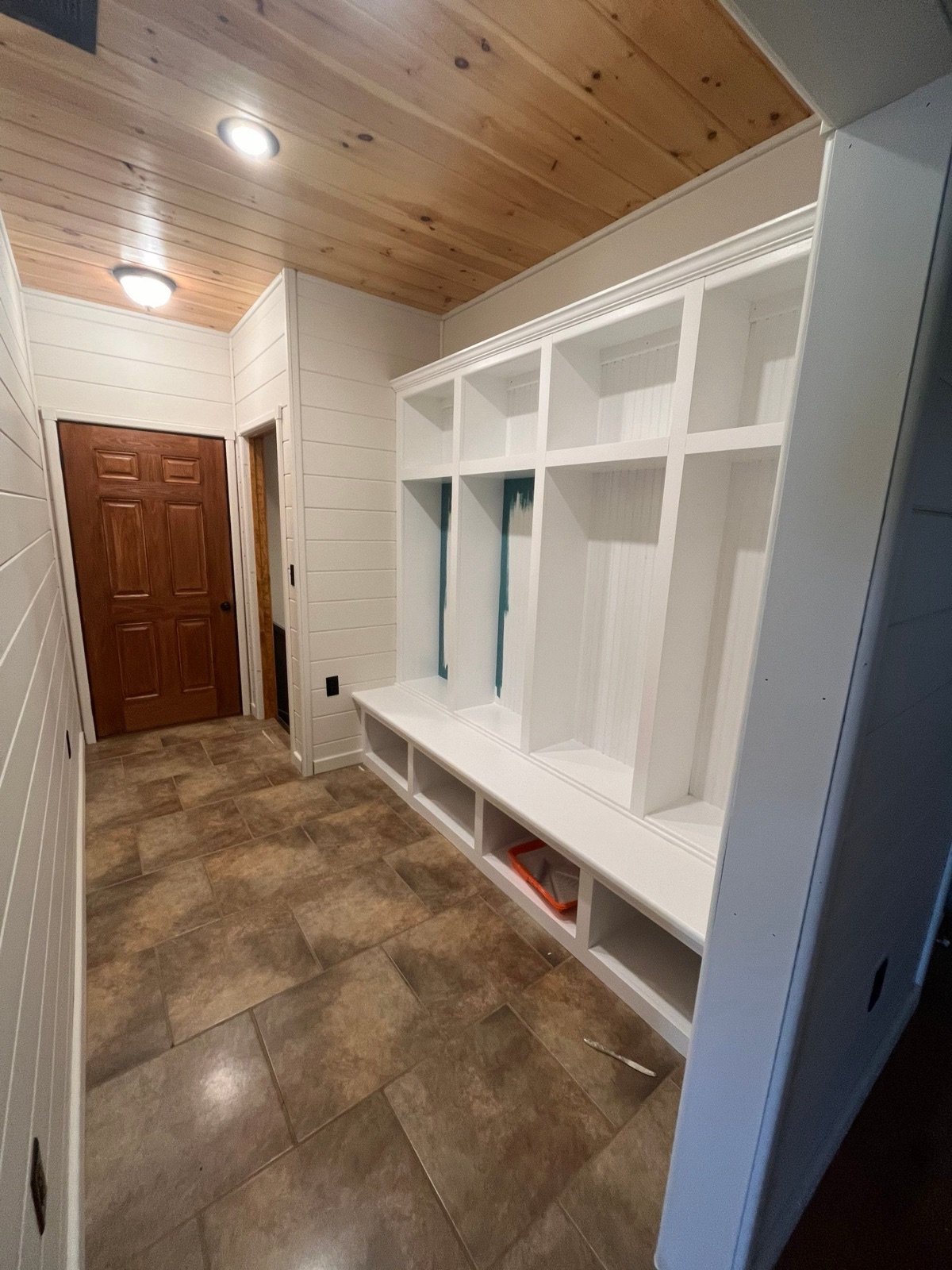
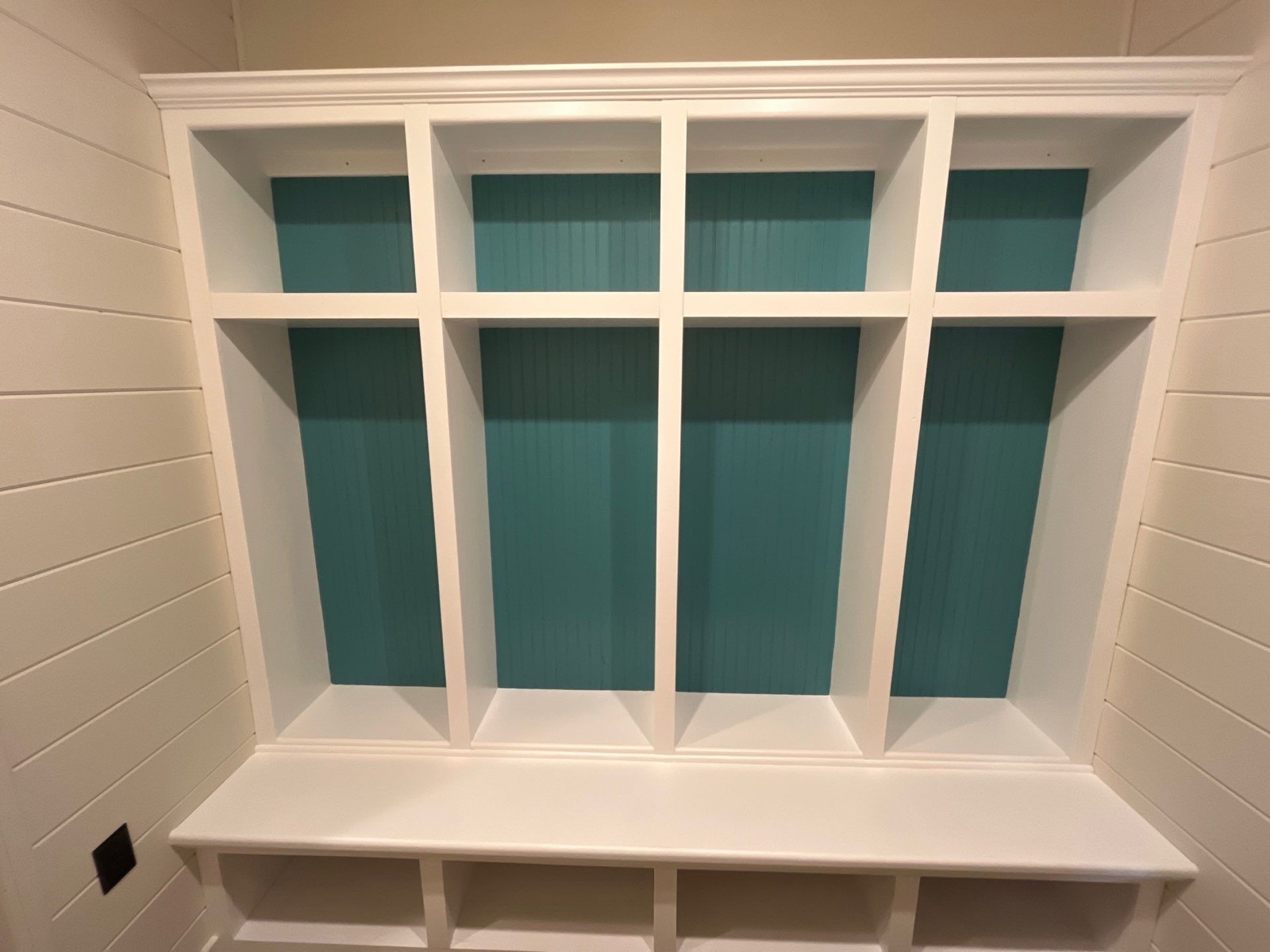
The mudroom below is from a cabin repaint we finished this August. The lockers were already built and in good shape. Our part was the finish, bringing the casework into the palette the rest of the house was getting.
Color in the backs does the work
White on the casework and a color behind it is the arrangement that makes a mudroom look built rather than assembled. The white keeps the frames and the bench reading as one piece of cabinetry against the wall. The teal in the beadboard backs gives the lockers depth so they do not disappear into a white room, and it means the surface directly behind hanging coats is the one carrying color instead of showing every scuff.
It also solves the specific problem with a cabin entry, which is that white next to raw pine goes yellow-looking fast. A saturated color in the recesses gives the eye something cooler to land on and the pine stops dominating.
Flat paint does not belong in an entry
Sheen matters more here than in any other room. Flat and matte hold dirt in the surface and cannot be scrubbed without burnishing a shiny patch where you rubbed, and a mudroom wall gets rubbed constantly. Satin on the walls and semi-gloss on the casework and trim is the combination that survives, because both wipe clean with a wet rag and neither shows the wipe.
Red clay is the argument for it. Clay dust is fine enough to bond to a porous surface, so on flat paint it settles into the finish and stays there. Satin gives it nothing to hold and it comes off with the rag.
What goes wrong when the prep is skipped
Existing millwork is not raw wood, and painting it like raw wood is why so many mudroom refreshes peel at the bench edge within a year. Everything gets degreased first, because the hand oil on a locker frame is what breaks the bond. Then scuff-sanded so the new coat has tooth, then a bonding primer.
Knotty pine adds a second step. Knots push tannin through paint for months, and they come back through white as brown rings well after you have put the drop cloths away. Every knot takes a stain-blocking primer before color goes near it.
The entry everyone uses is rarely the front door
In most houses up here the working entry is the side or back door off the gravel drive, or the one that comes up from the garage or basement. That is the door that needs the mudroom treatment, and it is usually the one that got the cheapest finish when the house was built.
Laundry rooms end up doing double duty as the mudroom in a lot of North Georgia floor plans. Same rules apply, with one addition: a laundry room holds humidity, so the sheen that scrubs is also the sheen that resists the damp.
Rentals get the fastest return here
A short-term rental entry is the first thing a guest sees and the last surface anybody thinks to maintain. Repainting it protects the floors past it, since grit tracked down a hallway is what wears a hardwood finish, and refinishing floors costs many times what an entry repaint does.
It also photographs. A mudroom with clean white lockers and a color behind them is a listing photo. Worn, yellowing casework is the reason that room never makes the listing, which tells you what guests make of it on the way in.
Getting a quote on yours
Mudroom work sits inside our interior painting, and the casework side is the same process as cabinet painting: hardware off, degrease, sand, prime, finish. The whole cabin this mudroom came from is in the interior repaint portfolio, and the bedrooms and bonus room in it got wallpaper rather than paint.
Send a photo of your entry through the estimate form and we can quote it without a site visit. Tell us what the millwork is finished in now, painted or stained, because that changes the prep more than the size of the room does.
Interested in bringing your own project to life?
Get An Estimate Today