Almost every cabin interior in these mountains has the same problem. Knotty pine on the walls, knotty pine on the ceiling, oak floors, and a stone chimney, all of it in the same warm orange register. By four in the afternoon the room reads brown.
The usual fix is to lighten it. We do a lot of that, and it works: our Morganton whitewash job took a whole cabin two shades brighter while leaving the grain visible. But it is not the only answer, and on this cabin the owner went the opposite direction.
Dark gives the wood something to be
Paint one plane black and the pine stops being the whole room and starts being a feature of it. The wall below sits beside a river-rock chimney, under a pine ceiling, with a triangle gable window above it. Before, all four of those things competed. Now the black takes the background job and the rock and the wood each get to be the thing you look at.
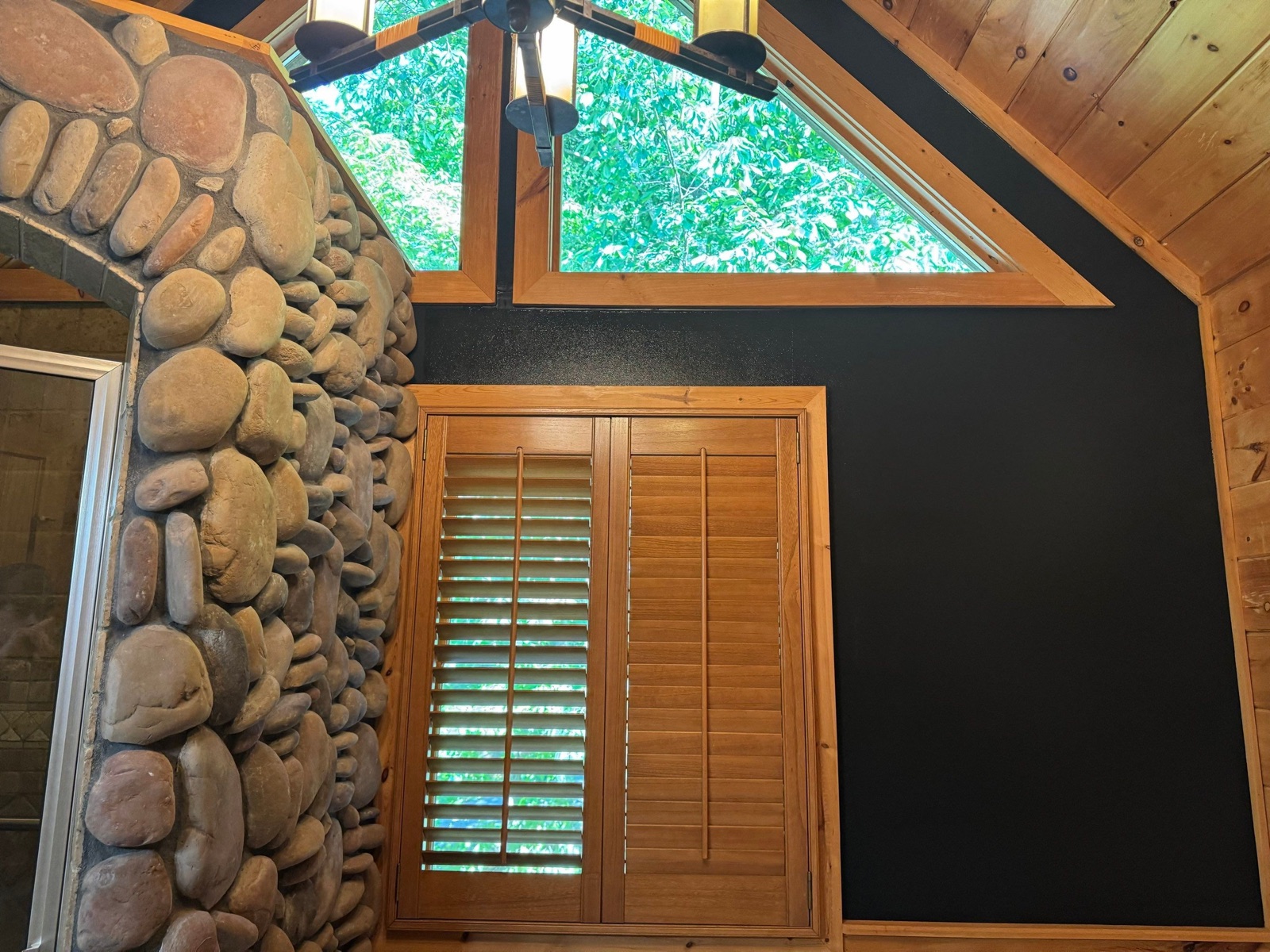
The other reason this works up here is light. A cabin under heavy tree cover never gets the flat bright daylight that makes dark walls feel like a cave in a suburban living room. The light that does come in is dappled and low, and a dark wall holds it instead of bouncing it around.
Below the chair rail is the easy version
If a whole black wall is more than you want to commit to, the wainscot line does most of the work for a third of the risk. On another wall of the same cabin we ran navy up to the rail and left a cedar shake feature wall above it.
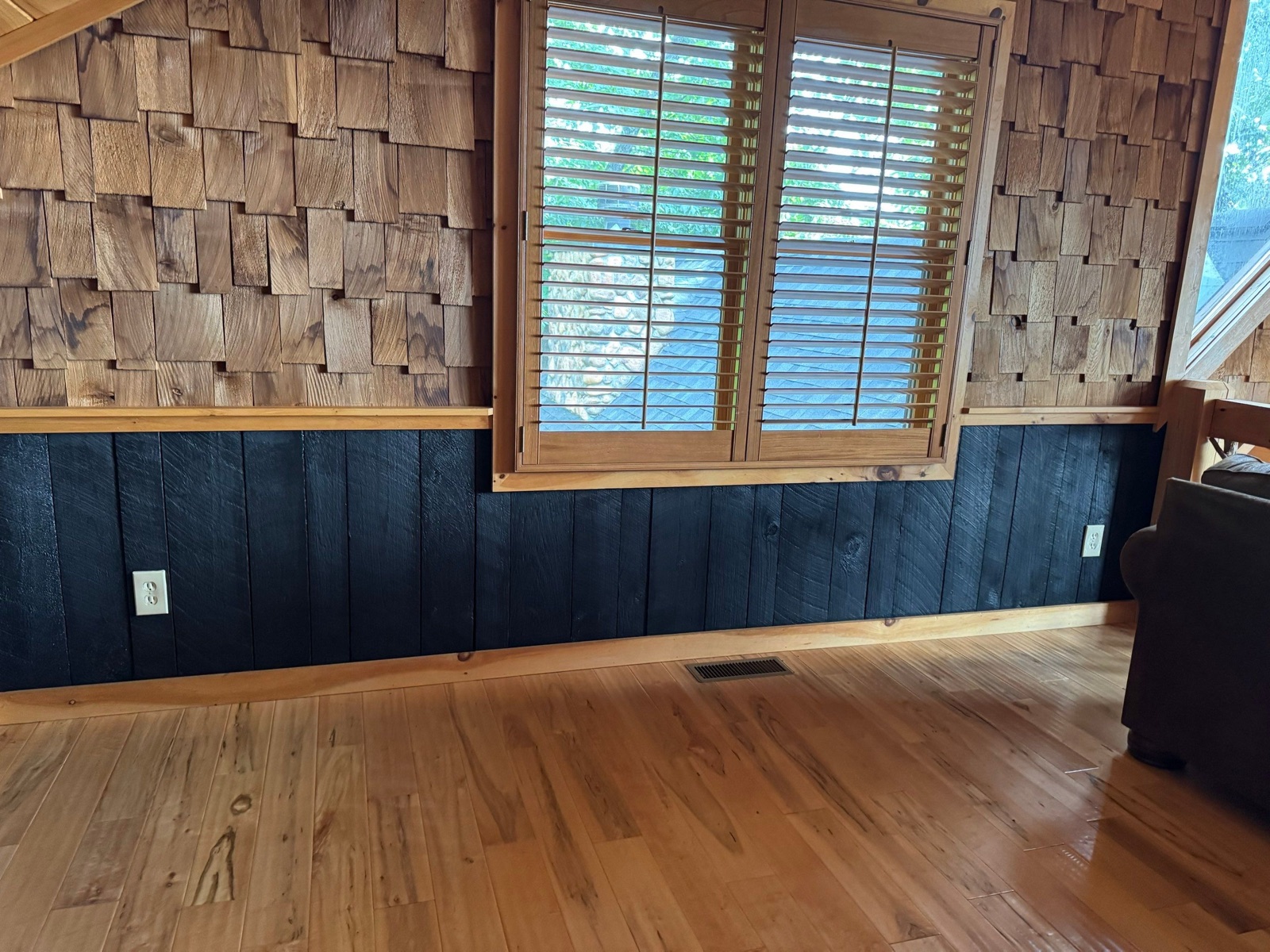
This is also the practical choice in a rental. The bottom three feet of a wall is what takes the luggage, the dog, the kids, and the vacuum. A dark satin down there hides a season of scuffs that would show on cream, and it touches up without repainting the whole room.
What it actually takes on pine
Dark colors are less forgiving than light ones, which is the part people find out too late. Every high spot, every proud nail, every sanding scratch shows in a dark satin sheen in a way it never would in an eggshell white.
Knots are the bigger issue. Pine knots push tannin through paint, and they will do it through black just as happily as through white, coming back as dull rings a few weeks after you thought you were finished. Every knot gets spot-primed with a stain-blocking primer before color goes anywhere near it. That step is most of why a job like this takes the days it takes.
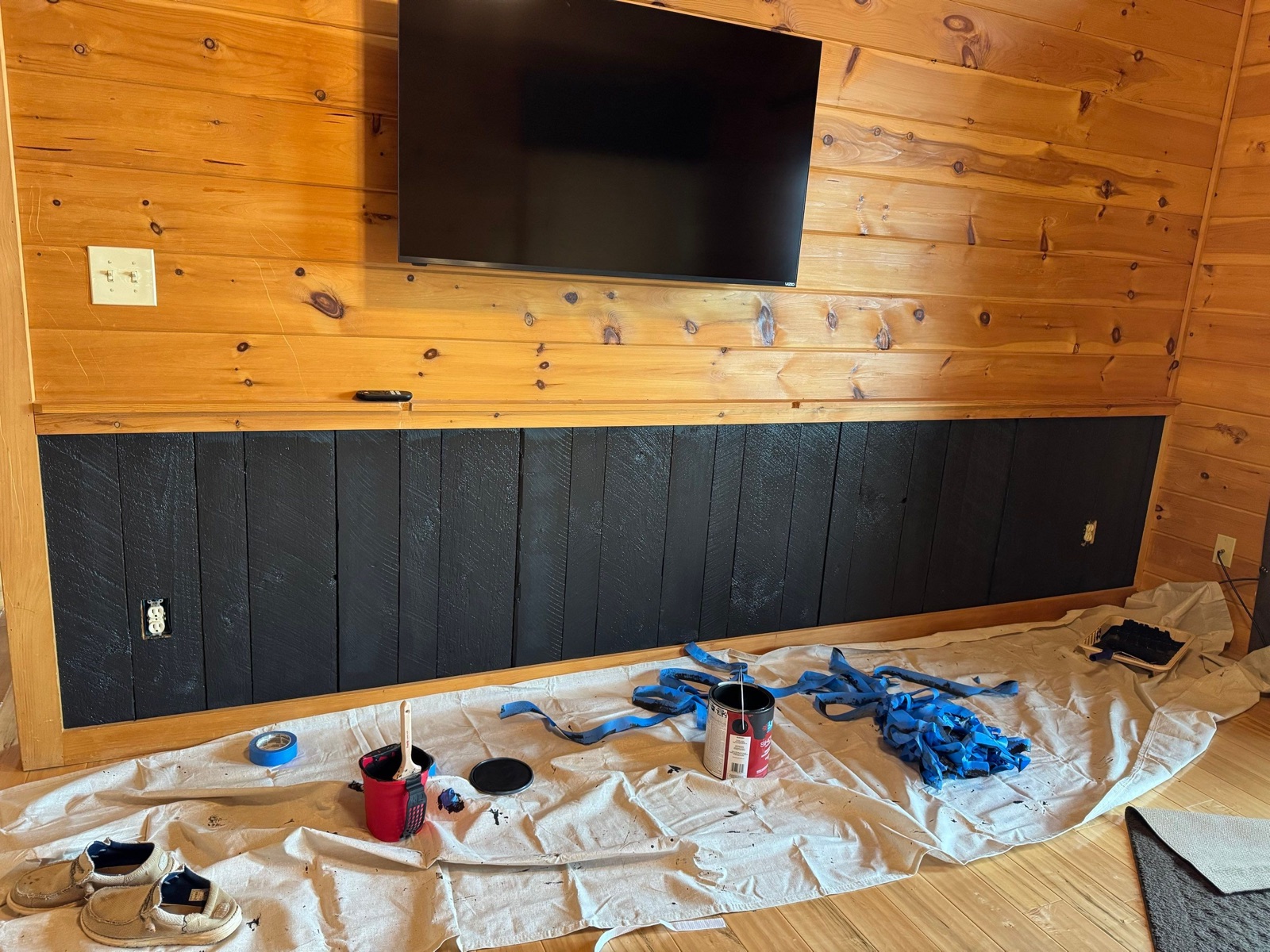
Dark also wants more coats. Two is optimistic over raw or previously finished wood, and the second coat is where the sheen evens out. If someone quotes you a dark accent wall as a one-coat afternoon, that is the quote to be suspicious of.
The same trick works on cabinets
Cabinets are the highest-return version of this. The bathroom vanity in this cabin was builder oak, structurally perfect and about twenty years out of style. Same boxes, same granite, same vessel sinks, different color.
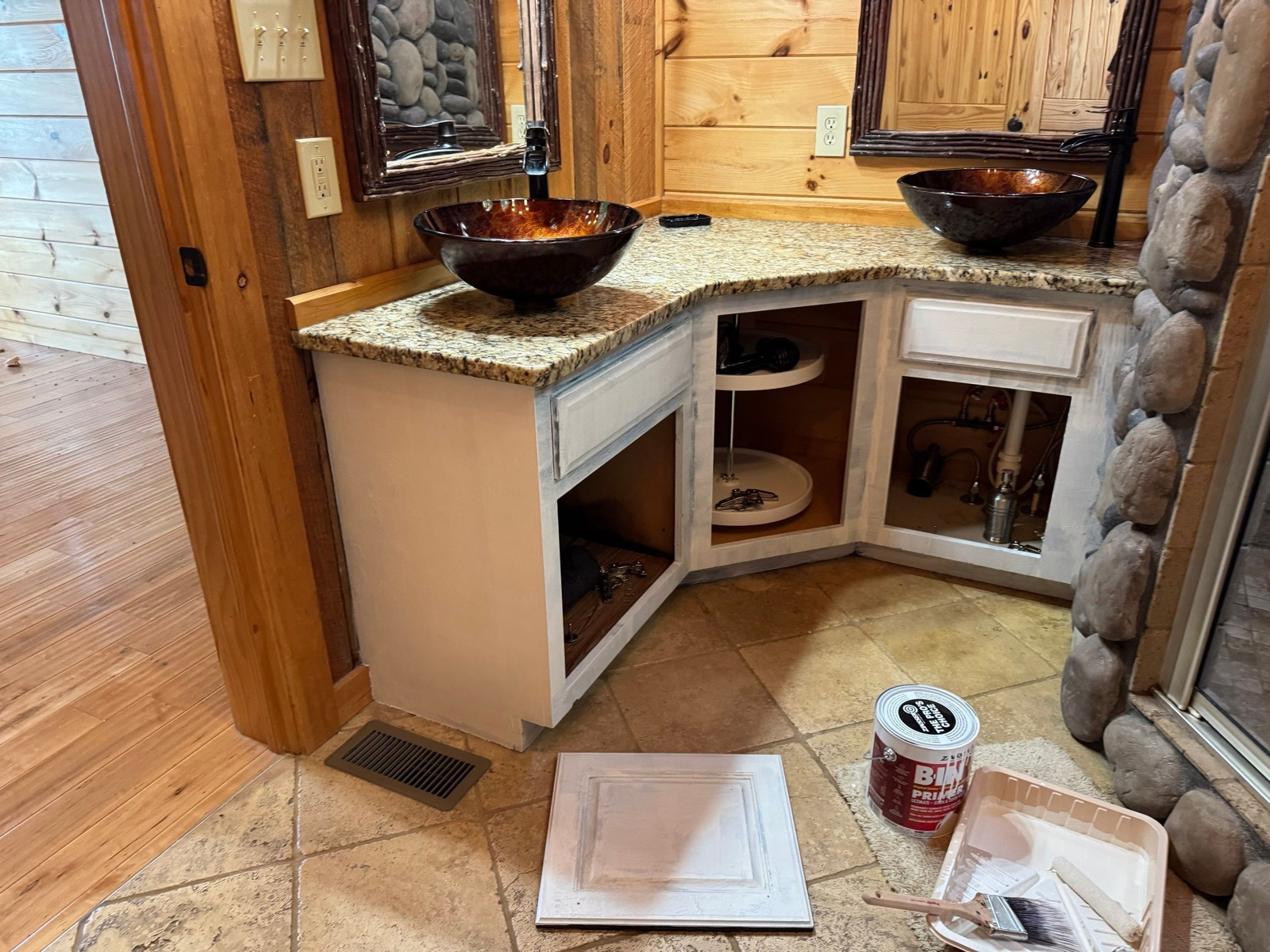
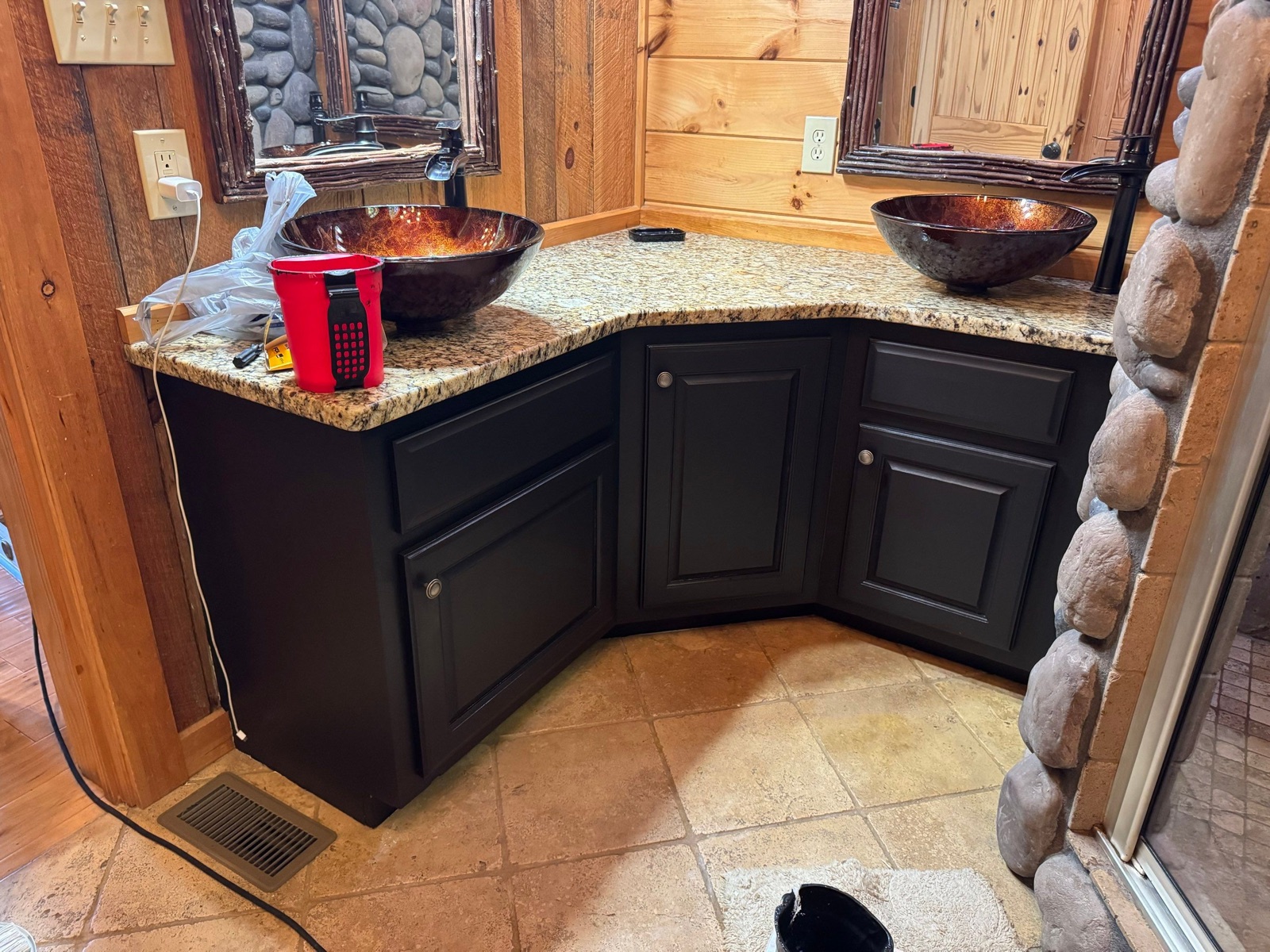
Doors and hardware come off, everything gets degreased, then scuff-sanded, then a bonding primer. The degrease is the step DIY jobs skip and it is why so many of them peel at the handles within a year. It is hand oil breaking the bond, not cheap paint.
Worth doing before the season
If this is a rental, the honest argument for repainting is that it gives your listing a new lead photo. Guests scroll past cabins that look like every other cabin, and a room with one strong dark wall photographs differently from the twelve orange-pine interiors above and below it in the search results.
The whole set from this job is in our accent walls and cabinet painting portfolio, and the full service is on our interior painting page. If you are weighing a color, send a photo of the wood through the estimate form. Pine varies a lot cabin to cabin, and what a color does on yours is not what it does on the sample card.
Interested in bringing your own project to life?
Get An Estimate Today