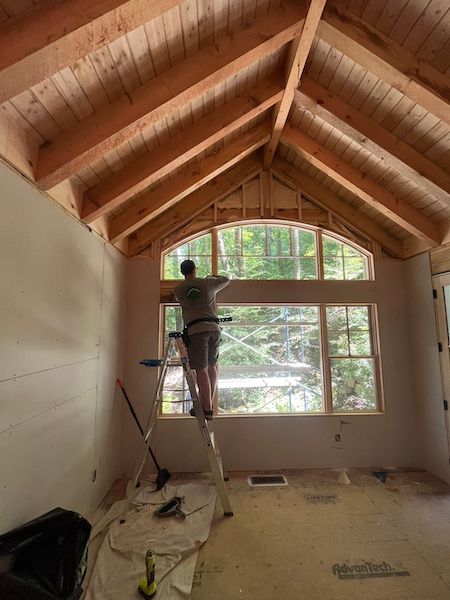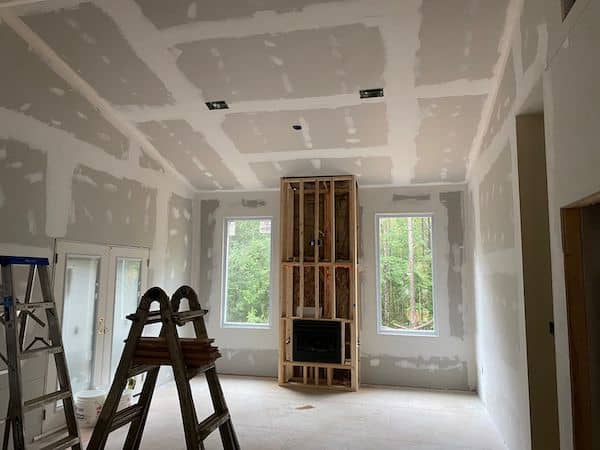

Drywall is the one trade where the whole job is judged under a single lamp at the wrong angle. Hanging it is straightforward. Finishing it so the seam disappears when afternoon light rakes across the wall is the part that separates a repair you forget about from one you see every day.
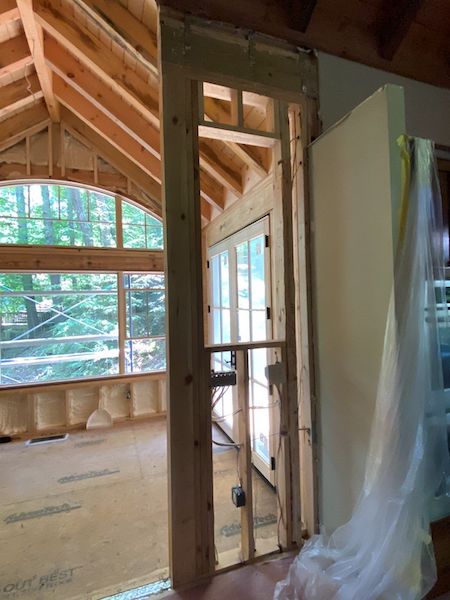
A crack that reopens in the same place was never really a drywall problem. Houses up here move seasonally, and the corner over a door or window is where that movement concentrates. Filling it with compound and painting over it gets you through one cycle at most.
The repair that holds means opening it up, taping it properly, and in some spots using a joint that is designed to flex. If the movement is coming from something structural we will tell you that instead of selling you a patch that fails again next winter.
Ceiling stains almost always mean the water came from somewhere, and cutting out the damaged board without finding the source just means doing it twice. We look for the source first. Once it is dry and the leak is handled, the ceiling gets cut back to sound board, patched, and textured to match what is around it.
Matching an old texture is its own skill and worth asking about. A flat patch in a textured ceiling reads as a repair from across the room.
Sanding drywall makes fine dust that travels through a whole house if nobody stops it. We seal the work area and cover what stays in the room. If the house is occupied or it is a rental between guests, say so and we will plan the containment accordingly.
We took a basement in Mineral Bluff from framing to finished walls, written up in our basement drywall project post. The cabin great room and a run of ceiling repairs and patches are in the portfolio below.
We cover the North Georgia mountains, plus the nearby corners of western North Carolina and southeast Tennessee. The shaded areas on the map are the ZIP codes we serve. Tap or hover on any area to see the town.
Send a photo of the damage and one from a few steps back through the estimate form. The wide shot tells us about the texture and the light, which is usually what decides how the repair has to be done.